01 / Production
It ships or it isn't finished.
A model that only runs in a notebook hasn't been built yet. I take the work to the point where it has an endpoint, a container and traffic that isn't mine.
About
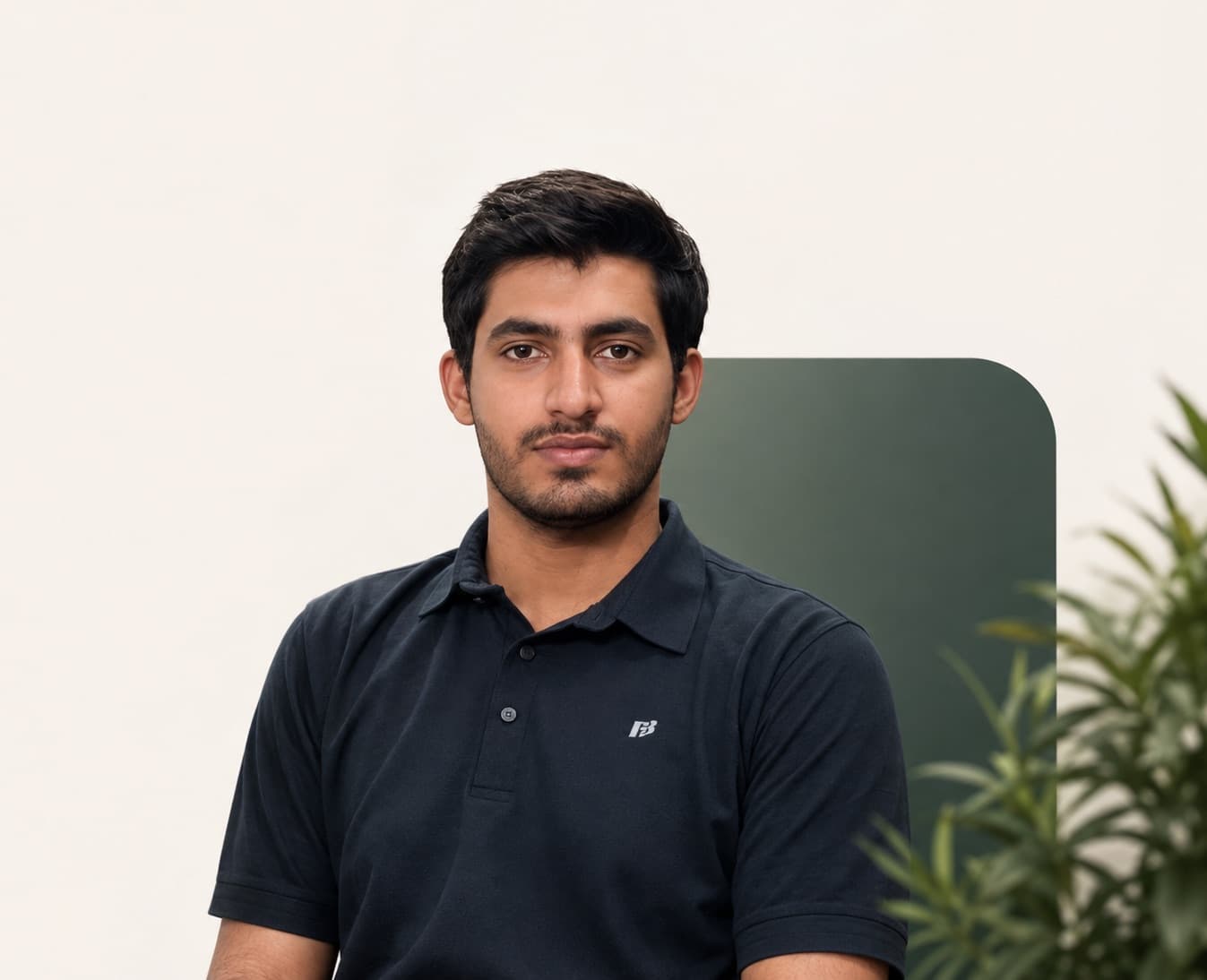
I'm an AI Engineer and Data Scientist working from Lahore, Punjab. Most of my week goes into agentic systems: agents that hold tools, hand work to each other and stay inside a latency budget. Right now that includes agentic voice chat agents, where the model has to listen, reason and answer inside a single turn.
The public record sits under alihassanml carries 150 repositories and 298 stars. The work spans multi-agent systems and voice agents built on LangGraph, Pydantic AI, MCP and local models through Ollama; retrieval-augmented generation, including federated and knowledge-graph RAG; computer vision, with YOLOv11 models for emotion, sign language, workplace safety and security; AI automation through n8n; and the MLOps that keeps any of it honest: Docker, AWS, DVC, CI/CD, experiment tracking.
The most-starred piece is a YOLOv11 face emotion detector at 31 stars, with smoking detection at 26, a self-driving steering model at 20 and 40-class sign language recognition at 12 behind it. I write mostly Python (72 of those repositories are Jupyter notebooks, 33 are Python), plus TypeScript when an AI product needs a front end people will actually use. Client work runs through Upwork, and what I hand over is a running system.
How I work
01 / Production
A model that only runs in a notebook hasn't been built yet. I take the work to the point where it has an endpoint, a container and traffic that isn't mine.
02 / Evidence
Tracked experiments, versioned data, a result you can reproduce from the repository. If a number can't be checked, it doesn't get said out loud.
03 / Data
Local models through Ollama, on-premise inference and federated setups exist for a reason. When the data can't leave, the model comes to it.
04 / Restraint
The useful question is rarely which model is biggest. It's which one is small enough to run at the latency and cost the system actually has.
Stack
Tell me what the system has to do and where it has to run, and I'll tell you what it takes to get there.
Start a project